
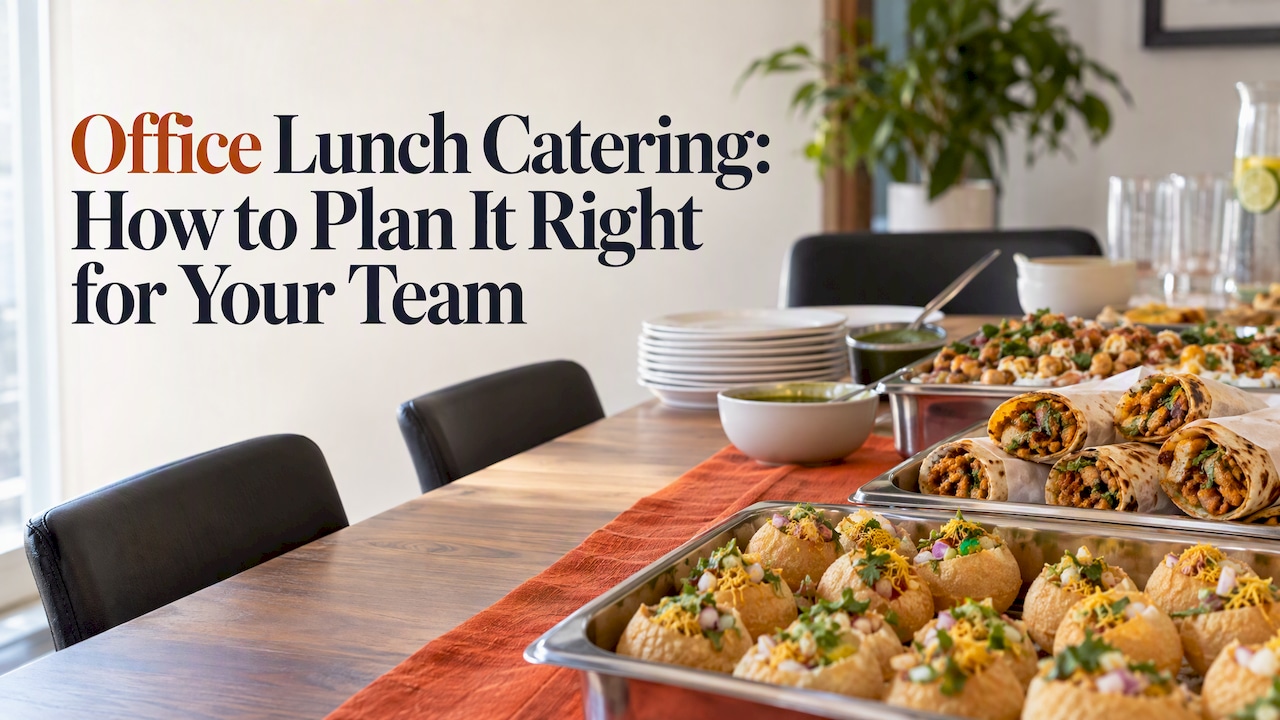
A good office lunch comes down to five decisions: the format, a menu that works for everyone at the table, the headcount and dietary needs, the delivery window, and a few questions you ask the caterer before you book. Get those right and the lunch is on time, hot, and nobody is left with nothing to eat. This guide walks through each one, with a closer look at Indian street food as a team lunch, since that is what we cook every day at Apna Chaat in Surrey.
ApnachaatBring Indian Street Food to LunchApna Chaat serves authentic Indian street food in Surrey, with a selection ranging from Golgappas to Kathi Rolls for your team.Visit Apna Chaat
TL;DR
- Pick the format first (boxed lunches, a shared buffet, or a mix). It decides the staffing, setup space and how much of the food stays hot.
- Ask every guest about allergies and dietary needs when they RSVP, and make sure the food is labelled on the day.
- Hot food stays at 60°C or above and cold food at 4°C or below. Agree the delivery window and who meets the driver.
- Indian street food suits mixed groups because so many dishes are vegetarian, and you can offer vegan and gluten-free choices alongside.
- Order early, confirm headcount in writing, and ask for a written quote that lists everything included.
Table of Contents
- Choose the serving format before the menu
- Plan the numbers: portions, headcount and budget
- Why Indian street food works for an office lunch
- Dietary needs, allergies and spice levels
- Food safety on delivery day
- Timing, delivery and setup
- Perspective: what we have learned from street food on a shared table
- Order office lunch catering from Apna Chaat
- FAQ
- Sources
Choose the serving format before the menu
Most teams start by asking what to eat. Start instead with how people will eat, because the format limits the menu.
| Format | Best for | Watch out for |
|---|---|---|
| Individual boxed lunches | Working meetings, people eating at desks, tight agendas | Less choice on the day, so collect orders in advance |
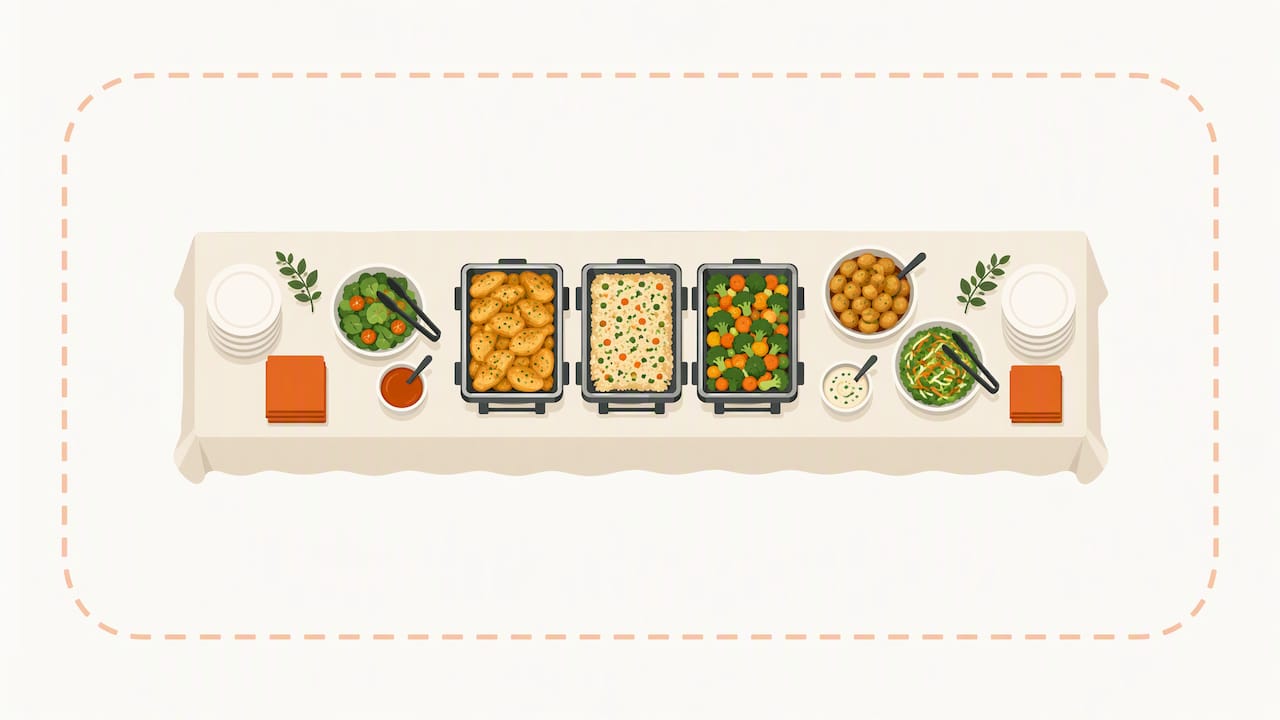
| Shared buffet or trays | Team lunches, celebrations, 10+ people | Needs table space, serving utensils and a clear line |
| Snack-style grazing (chaat, samosas, rolls) | Standing events, open houses, casual Fridays | Not a full meal for everyone unless you plan enough variety |
| Mixed: trays plus a few special-diet boxes | Groups with allergies or strict diets | Needs labelling so the boxes do not get mixed up |
For a working lunch where people keep typing, wraps, rolls and boxed meals are easiest. For a team that wants to sit together, trays in the middle of the table create the feel of a shared meal and let people try more.
Think about the room, too. A meeting room with a small table cannot hold six trays, serving spoons and plates. If the food has to be set up in a kitchen or a hallway, say so when you order.
Plan the numbers: portions, headcount and budget
Count heads, then add a little
Use the confirmed RSVP count, not the invite list. Then ask yourself who else will show up: a visiting client, a contractor, someone from the next floor. Small groups should plan a small margin. For a buffet, a caterer will usually suggest a number of dishes by headcount, so ask what they recommend instead of guessing.
A rough rule for shared dishes: with a variety of mains, sides and breads, people take a little of several things. With only one or two mains, people take more of each. More variety does not always mean more food, but it does mean fewer people leaving hungry.
What drives the per-person price
Prices vary widely across Canada, and any single figure in a blog post depends on the city, the year and the service level. These are the things that move the number in your quote:
- Drop-off or staffed. Food delivered in trays costs less than a service that sends staff to set up and serve.
- Number of dishes. Each extra hot dish adds prep and cost.
- Protein. Paneer, chicken and lamb sit at different price points, as do vegetable-only dishes.
- Drinks and extras. Beverages, desserts, disposable plates and cutlery are often listed separately.
- Delivery distance and timing. A far-off address or a tight window can add a delivery fee.
- Tax. Ask whether the quote is before or after tax.
Ask for a per-person figure and a total, with each line item. That makes it easy to compare two quotes fairly, or to trim a dish if you are over budget.
We do not publish catering prices, because each order depends on the menu, the headcount and the delivery. Contact us about catering with your date and group size and we will quote for your exact order.
Why Indian street food works for an office lunch
A team lunch has an awkward job: one menu, many eaters. Some are vegetarian, some do not eat beef or pork, some avoid gluten, some do not like heat. Indian street food handles that better than most cuisines, for a few reasons.
- Plenty of vegetarian dishes. Chaats, samosas, pakoras, chole bhature and paneer dishes are vegetarian by tradition, so the vegetarians are not eating a side salad while others eat the main.
- Heat is adjustable. Chutneys, pani and sauces come on the side or can be mild, so people choose their own level.
- It is built to share. Small plates and wraps are easy to take a bit of and pass around.
- It feels like an occasion. A tray of golgappas or a chaat spread starts conversations in a way a sandwich platter rarely does.
Dishes that travel well and serve well
Not every street food survives a 30-minute drive. Crisp items go soft in a sealed container, and some dishes are best assembled on the spot. Here is how we think about it:
- Wraps and kathi rolls. The easiest option for a working lunch. They hold together, can be cut in half and are eaten by hand. Our menu has a full wraps and rolls section.
- Samosas and pakoras. Good as a starter or a snack tray, with chutneys on the side. Best eaten soon after they arrive.
- Bhatura, puri and curries. Hearty mains for a seated lunch. Curries hold heat well in trays.
- Chaats. Excellent for a casual, stand-up lunch. Components such as crisp bases, chutneys and toppings are best kept separate and combined just before serving.
- Golgappas and pani puri. A fun interactive stop, but plan how and when they will be filled, so they stay crisp.
- Indian-style Chinese, tikkas and sizzlers. Substantial hot options for people who want something more filling.
- South Indian dishes. A good alternative for guests who like lighter, rice or lentil-based food.
- Kids menu and burgers or sandwiches. Useful for a family-day lunch or when some guests are less adventurous.
A sample mix for a team of 15 to 20
This is an example, not a quote, and the exact selection would depend on your group:
- A starter tray of samosas and pakoras with two chutneys.
- One vegetarian curry and one chicken or paneer tikka dish.
- A tray of bhatura or flatbreads, plus rice.
- A set of wraps or rolls for those who want something handheld.
- A clearly labelled vegan and gluten-free option for anyone who needs it.
- Drinks to match the occasion.
That gives every person a choice, keeps most of the table vegetarian-friendly and still has a couple of meat options.
Dietary needs, allergies and spice levels
This is the part of office catering people most often get wrong, and the cost of getting it wrong is highest. A guest with a severe allergy cannot just “pick around” something.
Ask early and ask directly
Put a question on the RSVP or sign-up form. Simon Fraser University’s guidance on food and catering recommends asking guests about preferences, allergies or restrictions in registration, and offering vegetarian, vegan, gluten-free, halal, kosher, dairy-free and allergen-avoiding options where possible. A simple form works: “Any allergies or dietary needs we should know about?” with a free-text box.
Pass the answers to the caterer as written, not from memory. Give them the exact allergen, because “nut-free” and “no peanuts” are not the same thing.
Keep options separate and labelled
McGill University’s food inclusivity guide suggests separate cookware, utensils and platters for different dietary options, and where possible separate tables, with ingredients labelled. Food Allergy Canada’s guidance for caterers stresses clean or dedicated equipment, keeping allergen-safe foods apart and putting clear ingredient signs beside buffet items.
In practice:
- Ask the caterer to pack special-diet meals in separate, labelled containers.
- Put those meals out first, and use their own serving spoons.
- Make a small card for each dish: name, main ingredients, and whether it is vegetarian, vegan or gluten-free.
- If someone has a severe allergy, speak to the caterer directly and ask how they prevent cross-contact in the kitchen. Do not rely on a menu label alone. That person’s own doctor or allergist is the right authority on what is safe for them.
Spice levels
Say “medium” when you order for a mixed group, and ask for hot chutneys and chili sauces on the side. A table of people who have never eaten Indian food should not meet the hottest dish first. Label which dishes are mild, medium or hot, and leave the heat to the guests.
Make the buffet accessible
SFU also advises leaving at least one metre of clearance around buffet food so wheelchair users and others who need space can reach it. Arrange tables with room on all sides, avoid foods that need two hands and a lot of balance, and consider having someone offer to fill a plate.
Food safety on delivery day
The most useful number to know is the temperature range where bacteria multiply fastest. Health Canada explains that food should stay out of the 4°C to 60°C danger zone, recommending insulated containers for hot food and ice packs for cold food.
Translated to office lunch:
- Hot food stays hot. Ask the caterer how they transport trays, and keep them closed until serving.
- Cold food stays cold. Chutneys, raita, salads and cut fruit belong in the fridge if lunch is delayed.
- Do not leave food out for hours. If the meeting runs late, put the leftovers in the fridge instead of leaving them on the table.
- Have a place for it on arrival. If lunch arrives at 11:30 and eating starts at 12:30, you need a plan for that hour, whether that is a fridge or a warm spot.
Time the delivery for shortly before you eat, not an hour earlier. Fifteen to thirty minutes is a common sweet spot for hot food.
Timing, delivery and setup
How far ahead to order
Small orders can sometimes be done at short notice, but do not count on it. Caterers in Canada commonly ask for a couple of days’ notice for office orders. Larger groups, special diets and busy periods such as the weeks before the holidays need more. We suggest ordering as soon as the date and headcount are set, and asking the caterer for their lead time when you first make contact. For our own catering, get in touch with the team and we will confirm timing for your date.
What to confirm with the caterer
Send this checklist by email so you have it in writing:
- Date, delivery time and the exact address, including floor, suite and loading entrance.
- Name and mobile number of the person who will meet the driver.
- Final headcount and the date you can still change it.
- Every dish, with quantities, and any allergen or dietary labelling.
- What is included: plates, cutlery, napkins, serving spoons, chafing dishes or heating.
- Whether setup or pickup of equipment is part of the order.
- Delivery fee, tax, and the full total.
- Cancellation and change terms.
Set up the room
Book the meeting room or kitchen for 30 minutes before lunch. Put the food at one end of a table rather than the middle so people can pass around both sides. Put plates and napkins at the start of the line, and have a bin and wipes nearby. Send a short reminder with the time and place so the food is not left in the lobby.
Perspective: what we have learned from street food on a shared table
At Apna Chaat we cook Indian street food, and the dishes on our menu were built for sharing, speed and variety. Our view is that the best office lunch is the one where nobody has to ask what they can eat.
That is why we suggest a spread rather than one big main dish. A group of fifteen will include a vegetarian, someone avoiding gluten, someone who does not eat spice and someone who wants something substantial. A menu that covers chaats, rolls, tikkas, curries, flatbreads, South Indian dishes and vegan and gluten-free options means each of them can fill a plate without a special request.
We also think lunch should be affordable and honest. Fresh ingredients and traditional recipes are what we are about, and a lunch the team talks about the next morning does more for morale than one that simply arrived on time.
— Pooja
Order office lunch catering from Apna Chaat
We are an Indian street food restaurant in Surrey, serving dine-in, takeaway and catering for events and office meetings across Metro Vancouver. Our menu runs from golgappas and chaats to kathi rolls, tikkas, Indian-style Chinese, South Indian specialties and a kids menu, with gluten-free and vegan options too.
To plan your team lunch, look through the full menu, then ask us about catering with your date, headcount, address and any dietary needs.
FAQ
How much food do I need for an office lunch?
Base it on your confirmed headcount, then ask the caterer how much they recommend for your menu. A spread with many dishes needs less per dish than a menu with one or two mains. If you are unsure, round up slightly, since leftovers are easier to deal with than hungry people.
Is Indian food a good choice for an office lunch?
Yes, particularly for mixed groups. Many Indian street food dishes are vegetarian, heat can be served on the side, and vegan and gluten-free options are easy to include if you plan them. Choose dishes that hold up in transit, such as wraps, rolls, curries and breads, and keep crisp items for soon after arrival.
How do I handle allergies when ordering for a team?
Ask each guest on the RSVP, and give the caterer the exact allergens in writing. Ask for separate, labelled containers and utensils, and have ingredient labels beside each dish. For a severe allergy, speak to the caterer directly about cross-contact and check with the guest on what they can safely eat.
How long can catered food sit out?
Hot food should stay at 60°C or above and cold food at 4°C or below, and anything in between is in the danger zone where bacteria multiply quickly. Time the delivery close to mealtime and refrigerate leftovers promptly. When in doubt about food that has been out for a long time, throw it away.
Sources
- Food and catering, SFU Public Square
- Food Inclusivity and Accessibility, McGill University
- Tips for food catering, Food Allergy Canada
- Conseils de sécurité : dîners à emporter à l’école, Health Canada


